Web Development Guide · 2026

Your Website Is Your Business's
Digital Address

Every customer searches online before they buy. A business without a website is a business that doesn't show up on the map. This guide breaks down why a website matters, the different types of websites AswebMatrix builds — HTML/CSS/JS, WordPress, Next.js with a CMS, and the MERN Stack — when to use each one, and why SEO, AEO, and GEO-friendly content is what actually gets you found today.

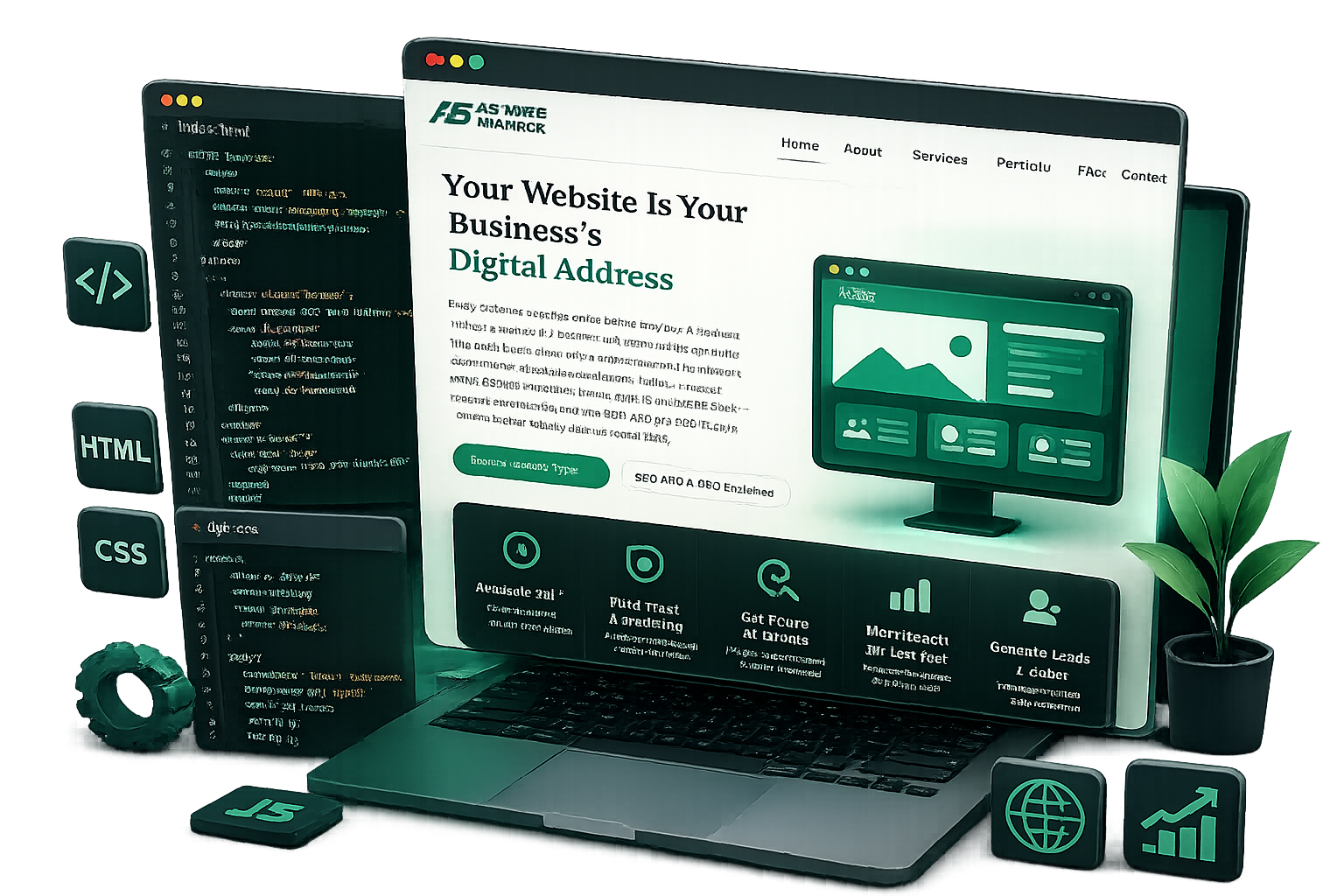
3D web development illustration showing a modern website interface with HTML, CSS, JavaScript code panels, UI components, and development icons in green and black colors.

Why Is a Website Important?

A website isn't just an "online business card" — it's your storefront that's open 24/7, working for you even while you sleep.

Available 24/7

A physical shop closes, but a website never does. Customers can check your services, pricing, and contact details at 2 a.m. and still convert.

Builds Trust and Credibility

A professional website makes a business look established and trustworthy. Without one, larger clients and partners often hesitate.

Gets You Found on Google

A business that doesn't appear in search results effectively doesn't exist for new customers. No website means no local SEO, no organic discovery.

More Reach for Less Cost

Once built, a website reaches thousands of potential customers at a fraction of the cost of print ads, billboards, or paid media alone.

Generates Leads and Sales

Contact forms, WhatsApp buttons, and online booking turn visitors into leads — a website works as a silent sales rep, around the clock.

Strengthens Your Brand

Consistent logo, colors, and tone across your website make your brand recognizable and memorable everywhere your customers find you.

Types of Websites AswebMatrix Builds

Every business has different needs — which means the right technology is different too. The ladder below is ordered by complexity: from a simple static page to a fully dynamic web application.

01Simplest

HTML, CSS & JavaScript (Static Website)

This is the foundation of the web. Every page is hand-coded, with no database or login system involved. Pages load instantly because nothing has to be calculated dynamically on the server.

When to use it: Portfolios, landing pages, small local businesses (salons, clinics, event pages) where content rarely changes.

Fastest load timeLowest costHard to update

02No-Code Friendly

WordPress (CMS Website)

WordPress is a Content Management System (CMS) that lets clients edit pages, blog posts, images, and products themselves — no coding required. Thousands of ready-made themes and plugins are available out of the box.

When to use it: Blogs, news sites, small e-commerce stores, or any client who wants to update content themselves on a regular basis.

Self-editableHuge plugin ecosystemMore plugins = slower site
03Fast + SEO-First

Next.js + CMS (Headless CMS Website)

Next.js is a React framework that uses Server-Side Rendering (SSR) and Static Generation to make pages load extremely fast. Paired with a headless CMS (like Sanity, Strapi, or Contentful), clients still get an easy content editor — without sacrificing speed.

When to use it: When you need speed, search ranking, and easy content updates at the same time — ideal for corporate sites, media sites, and brand websites that want to rank on top of Google.

Best SEO performanceVery fastSlightly higher dev cost
04Fully Custom

MERN Stack (MongoDB, Express, React, Node.js)

With MERN, the entire application is built from scratch — frontend (React), backend (Node.js + Express), and database (MongoDB) are all custom-designed around your exact requirements. No templates, full control.

When to use it: When your website needs login systems, user dashboards, payment gateways, or real-time features (chat, booking, order tracking) — think SaaS products, large e-commerce platforms, or full web apps.

Fully customScalableLonger dev timeline
Illustration showing the progression from HTML/CSS/JS to WordPress, Next.js + CMS, and MERN Stack with increasing complexity.

Website Types Compared

TechnologySpeedCostSelf-EditableBest For
HTML/CSS/JSVery fastLowNoPortfolios, landing pages
WordPressModerateLow–moderateYesBlogs, small stores
Next.js + CMSVery fastModerateYesBrand & corporate sites, SEO-focused sites
MERN StackFast (optimized)HigherVia custom panelSaaS, web apps, large platforms

SEO, AEO & GEO: Why Optimized Content Matters

Building a website isn't enough — it also needs to be found. That means writing and structuring content for three audiences at once: search engines, answer engines, and generative AI engines.

SEO — Search Engine Optimization

SEO is the process that gets your website ranking on Google's first page. It includes:

  • Proper keyword research and natural keyword usage
  • Fast load times and mobile-friendly design
  • Clear meta titles, meta descriptions, and heading structure (H1–H2–H3)
  • Quality backlinks and local Google Business listings

AEO — Answer Engine Optimization

AEO focuses on getting your content picked as the direct answer — in Google's featured snippets, "People Also Ask" boxes, and voice assistants like Siri, Alexa, or Google Assistant. It includes:

  • Writing content in a clear question-and-answer format
  • Giving a direct, concise answer in the first sentence
  • Using FAQ sections and structured headings
  • Adding FAQ/QAPage schema markup so engines can extract answers

GEO — Generative Engine Optimization

People now ask ChatGPT, Perplexity, and Gemini for answers, not just Google. GEO means writing content so that AI tools choose your website as their source. It includes:

  • Clear, fact-based, well-structured content
  • Structured data (schema markup) so AI can parse context
  • Original, credible information — never copy-pasted content
  • Explicit statements of facts, data, and definitions AI can cite directly

Key takeaway: HTML/CSS/JS and WordPress sites can support basic SEO, but a Next.js + CMS website performs best across SEO, AEO, and GEO thanks to server-side rendering, clean semantic HTML, and easy structured-data integration — which is why AswebMatrix recommends Next.js for brand-focused clients who want long-term search visibility.

Image Prompt

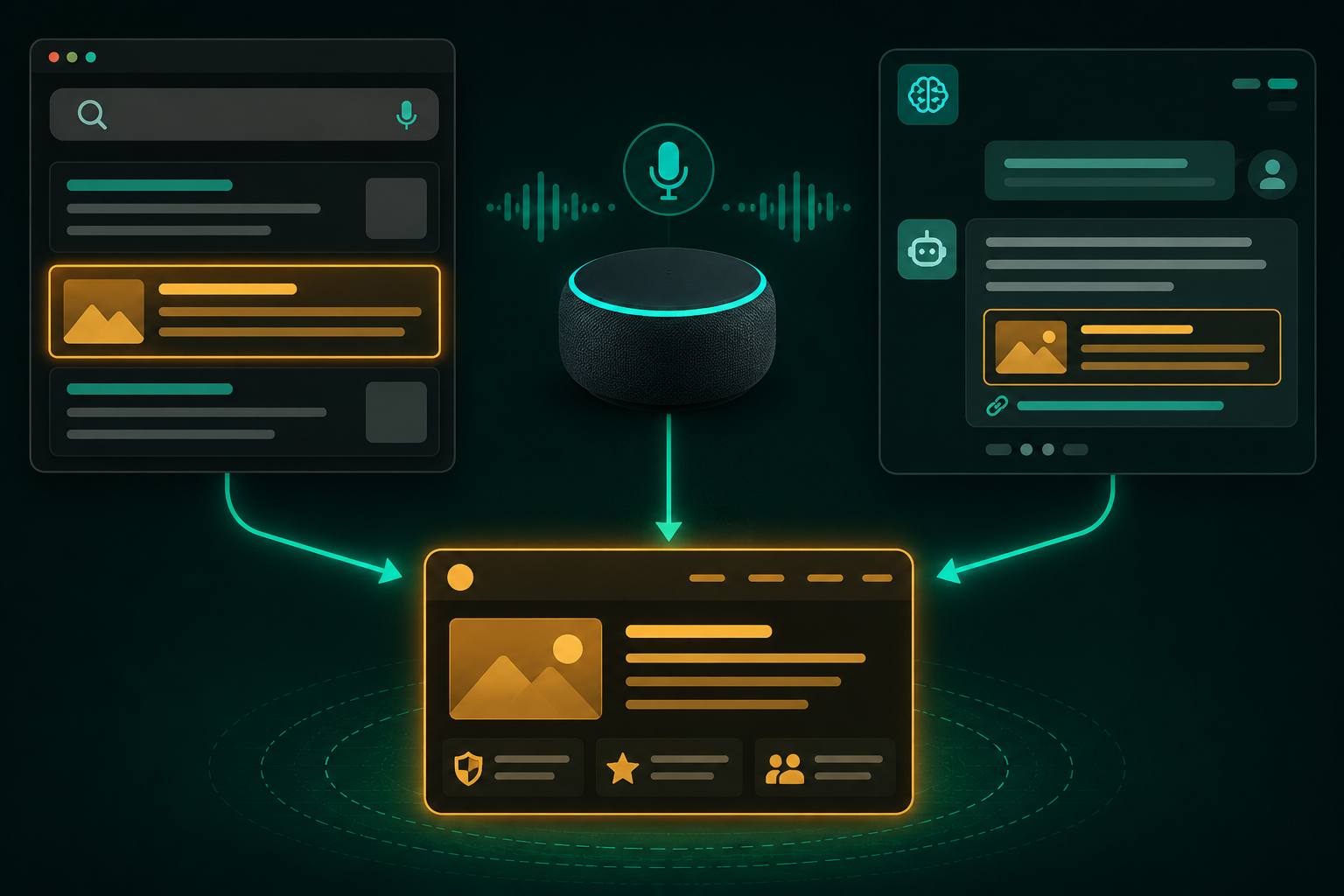
"A three-way split illustration showing a Google search results page, a voice assistant speaker with a soundwave, and an AI chatbot interface with a citation link, all connected by glowing teal (#00c49a) arrows pointing to one website card, dark green (#0a1f1c) background, amber (#f4a261) highlight on the winning website card, flat vector style, no text in image"

Frequently Asked Questions

Do I really need a website if I already have social media?

Yes. Social media accounts can be suspended, algorithms limit your reach, and you don't fully own that audience. A website is a permanent, fully-owned digital asset that works alongside social media, not instead of it.

Which website type is cheapest to start with?

A static HTML/CSS/JS website or a basic WordPress site is the most affordable starting point, ideal for portfolios, small local businesses, or simple landing pages.

Is WordPress good enough for SEO?

WordPress can rank well with the right plugins and clean themes, but it generally loads slower than Next.js, which can limit SEO and AEO performance at scale.

Why is Next.js recommended for SEO, AEO, and GEO?

Next.js renders pages on the server, producing fast, crawlable, well-structured HTML that search engines, voice assistants, and AI models can all read and cite easily.

When should I choose the MERN Stack instead of Next.js?

Choose MERN Stack when you need custom logins, dashboards, payments, or real-time features — essentially when you're building a full web application, not just a marketing website.